Rishi's Circular Farm


Rishi is originally from Calcutta, studied cooking and agriculture and food sustainability in Italy and Greece, and in recent years has been working as a chef in India, producing and consulting on restaurants. However, when he was stranded during the covid period, he went to Nilgiri to develop the concept. 2 years ago, he bought this Galaxy Valley land, designed and engineered the building by himself, and moved in a year ago. This year he started growing mushrooms, and now he has about 100 buckets of mushroom beds stacked up in his greenhouse for harvesting.
The mushrooms he is growing are oyster mushrooms. In Japan, they are called hiratake or eringi mushrooms, but there are many varieties outside of Japan. He grows four kinds of mushrooms here: king oyster (eringi), yellow oyster, pink oyster, and black oyster.

The residence and green house are attached to each other and connected by an indoor walkway.
One is for mushroom cultivation, and the greenhouse is equipped with water pipes and ventilation fans with steam jets so that temperature, humidity, and carbon dioxide levels can be controlled. On the wall next to the entrance is a small box where the environment can be set according to the growing season. Moreover, all electricity is generated by solar power, which was a surprise to me. Galaxy Valley is located at an altitude of 1,500 meters altitude in a mountainous area near the equator, so the daytime temperature is stable at around 20 degrees Celsius throughout the year. Mushrooms can be grown and harvested all year round without the need for heaters, even in winter, because the temperature is usually around 20-25 degrees Celsius. Incidentally, the greenhouses are divided into two rooms for cultivation, so harvesting can be done all year round with staggered timing.
Inside the greenhouses are six or seven buckets stacked one on top of the other, with holes in the sides at regular intervals for mushroom openings. The buckets are filled with inoculated wood chips, which look like just wet wood chips and are invisible to the naked eye, but the fungi grow into mushrooms in a matter of two to three months. Incidentally, it is possible to grow and pick mushrooms from one hole three times.
The other greenhouse is a simple greenhouse with an automatic fan, the floor is covered with black stones that store heat from the sun. The mushrooms are harvested and dried for sale. When mushrooms are dried to remove water, glutamic acid and other umami compounds are concentrated, and the flavor is enhanced compared to fresh mushrooms while maintaining their nutritional value. From there, they can be further processed into a variety of products, such as powdered, combined with herbs and spices, and marinated in oil. In addition to mushrooms, they also purchase ingredients from nearby organic farmers to develop processed products.
Like in Japan, dried mushrooms are a premium foodstuff in India. If they are organic, they are even more so. The company produces at low cost what can be sold at a high price. Low-cost does not mean low quality and low price, but rather, it means to reduce costs while reducing the burden on the environment by using self-sustaining solar energy and wood chips from waste wood. The cutting-edge business model of the circular economy, reusing waste materials, was found deep in the mountains of India. This is a new form of agribusiness, conceived by Rishi, who understands the unique ideas of chefs and the needs of restaurants.
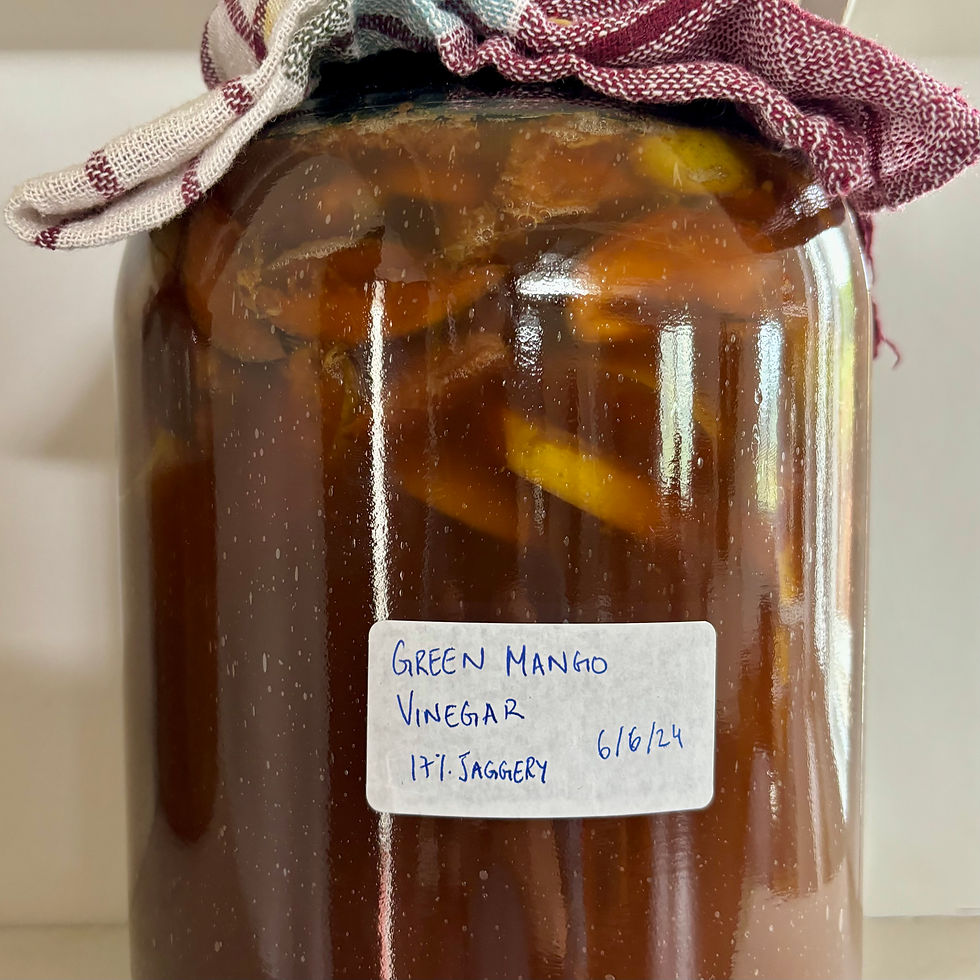
Just when he had no choice but to stay home in Covid, he thought of his own sustainable way of working with food, and it took its current form. In addition to mushrooms, Rishi is interested in the field of fermentation, and the lab shelves are lined with several jars of kombucha, ginger ale, fruit vinegar, and koji pickles, and every morning he would check with his eyes and nose that the fungus was alive inside the jars, as if he were greeting a friend he always sees on his way to school.
No one lives within a 200-meter radius of here. However, within a 10-meter radius, there are a vast number of fungi of various species, living together. There are not only fermented foods, but also various kinds of fermented fertilizers that become rice for the soil. At the entrance is liquid fertilizer made by fermenting discarded fish parts with brown sugar and EM bacteria. Outside is a compost tank with a faucet for compost and liquid fertilizer made from weeds and bison droppings. Around the building are fields converted from tea fields to vegetable fields, which were just beginning to be cultivated and sown when we visited. The former tea plantation had been monocultured and pesticides had been used, and the soil was now scrawny and sodden, but liquid manure and compost are being fed to the soil to promote soil health recovery with the power of bacteria.
Rishi will now develop fermented and processed foods with mushrooms made from waste as his main product, grow herbs and vegetables in his fields, and design the entire food environment in cooperation with surrounding organic farmers and restaurants. His style allows him to make a significant contribution to the local farming and food environment, even though he is only one farmer.

People and the universe, people and the earth, people and the mountains, people and the community, people and plants, people and animals, people and the soil. They may all be connected by bacteria, just invisible to the eye. When I thought that all things may be connected somewhere through bacteria, rather than thinking of them one by one in isolation, I felt that the key to a sustainable society is to be aware of bacteria and to live with them, a bacterial way of life. Besides, such circular farms may play a major role in the future society.


Comments